Some thoughts on intelligence and related matters

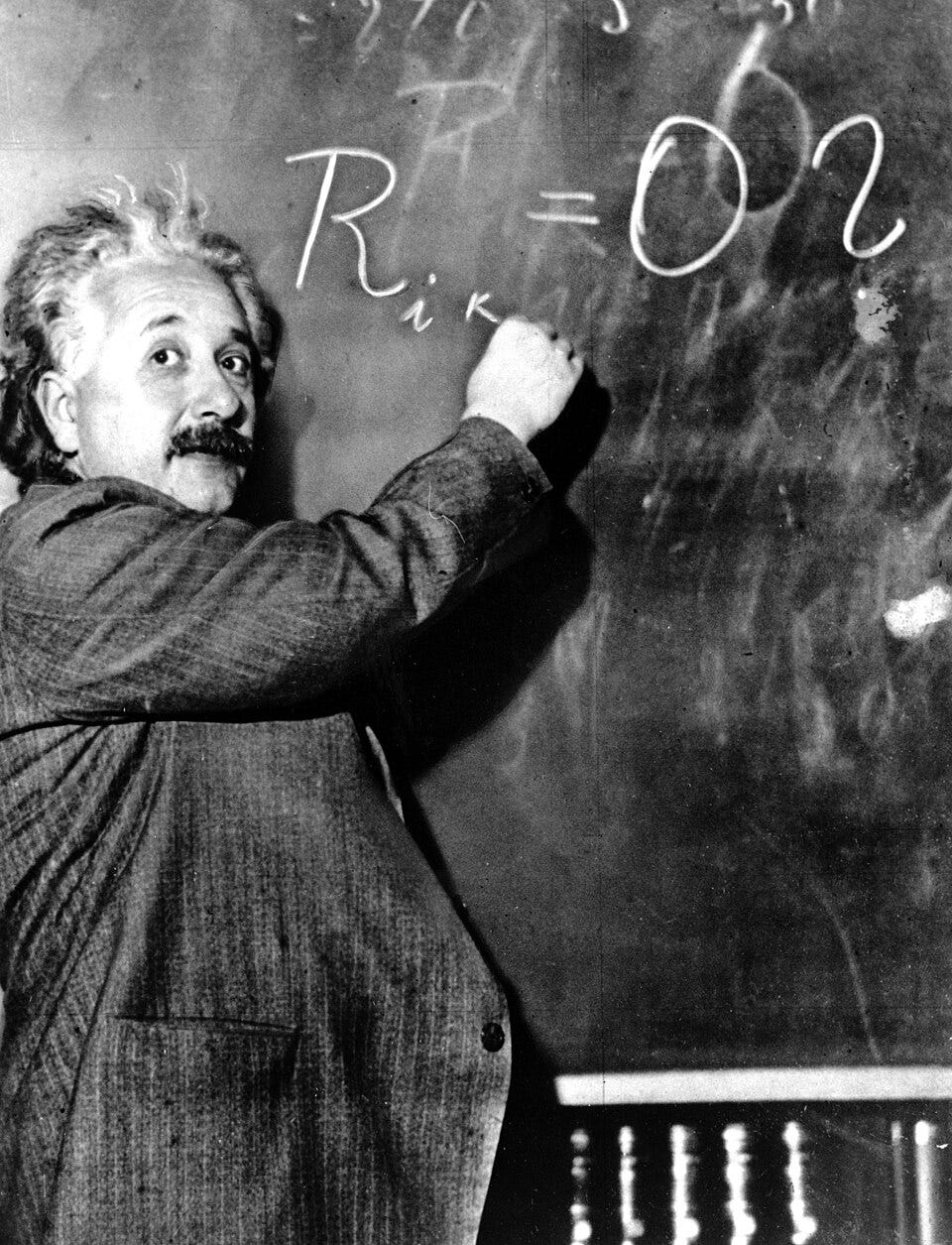
There is a diminishing return in the interest of IQ scores; what is done with intelligence is more interesting than comparing it. The main reason for an interest in comparing intellectual capability is because intellectual accomplishments are interesting.
Likewise, there is a diminishing return in the interest of average IQ scores of countries. Everybody wants to believe his group is the best and if it’s not one way, it’s another. There isn’t much anyone can do about the intelligence of nations, anyway, more important is for people to use their intelligence for good purposes.
IQ tests are not foolproof. If they were used as a social sorting system, people would find ways to stack the deck in their favor. People would hire coaches to prepare their children for tests or they would ensure that their children were given tests that played to their strengths or some other scheme.
The idea of a qualitative inability to understand based on degrees of intelligence is highly exaggerated; human beings can be fairly flexible in their thinking. It may take a genius to develop a new way of thinking, but it does not require genius to understand and apply it. If there was a group of people who had a qualitative difference in their way of thinking, they might have technologies that no one else could copy, but that has not happened so far.
Complexity is often used as a synonym for difficult, but that is not accurate. Things can be complicated without being difficult or difficult without being complicated. Indeed, often the issue is not complexity, but the lack of a good way to understand something. Also, even if it is not possible to trace the interactions of each piece, complex systems can be understood, by understanding the gist of how they work and what they do.
The idea that the prime trait for managing a society is intelligence is mistaken. Certainly, there needs to be a certain minimum level of knowledge and competence. But beyond that the most important traits are good motivations and honesty. Someone with both of those can continue to learn or bring in other people to advise him, but without honesty and good motivations, it doesn’t really matter how intelligent someone is. People will trust a societal plan that they do not understand from someone known to be honest and well-motivated, but otherwise is is far less likely.
Making a contribution to an intellectual field is both easier and harder than is frequently believed. Easier because it is not necessary to be smarter than everyone else, just to notice and follow up on something no one else has noticed. But it is harder because that noticing is far from trivial and it may take years of learning to be able to notice and appreciate what no one else has appreciated before. It is one thing to know about the wheel after it exists, quite another to make a wheel when no one knows what a wheel is.
I am very interested in the variety of modes of thinking that can exist, not so interested in artificial intelligence. The artificial intelligence paradigm was always a materialist paradigm, the idea that thinking could be constructed mechanistically. If it was just some philosopher working on it in isolation, then I would say he was misguided, but it has never been like that. It has always been externally funded and associated with all sorts of money-making and social engineering schemes, so it does not make sense to treat the paradigm as if it was the meditations of a philosopher in a cottage somewhere.
There are a tremendous variety of modes of thinking, among humans, animals, probably even angels. What is also remarkable is how certain kinds of thinking can be extended. No one has seen a four-dimensional object and yet the ideas of space in 2 and 3 dimensions can be fruitfully extended into 4 or more dimensions. It is not obvious ahead of time that this would be possible. Maybe the ideas would have fallen apart and yet, for instance, while there are five Platonic solids in 3 dimensions, there are six analogues of the Platonic solids in 4 dimensions and three in 5 and higher dimensions.
This kind of goes back to my earlier post about forms. On the one hand you have things that supposedly are inexhaustible, like virtual worlds and digital technology, yet within a few decades their paradigms show signs of wear. And on the other you have things that supposedly any day now people will get to the bottom of and yet they never do, such as life, or art.
And that is another question, what is the purpose of computation? With human beings as they are, it has been somewhat like chimpanzees with knives. Whatever the ultimate purpose of knives, chimpanzees are better off without them. But in any case, it is still a question of what should computation be about, even its effect on human beings has been overall negative.
You don’t hear much about it any more, but there has sometimes been a dualistic strain amongst computer people. If you imagine that a computer program is like a mind, then the analogy can go one of two ways. Either you come down on the side of mechanistic materialism and the mind is just a computer program or alternatively, you come down on the side of dualism and maybe a computer program is something like a mind. So then computer programming is exploring some kind of idealistic, mental space rather than just making money or designing means of distraction or surveillance. If that is what computation is, then it should not be associated with all these totalitarian schemes.
I do not actually believe that the mind is a computer program, but that kind of thinking is where I would guess this dualistic undercurrent came from. But I would suspect that those ideas are much closer to something true than the ideologies that are currently being pushed alongside computers and digital technology.